
As we get older, changes in our vision are common. You might need brighter light to read or find small print more difficult than before. But some changes are not simply “normal ageing.”
One of the most important eye conditions to be aware of after 60 is macular degeneration.
At Vision Clinic, we believe that understanding the early signs — and knowing when to act — can make a real difference to long-term vision.
What Is Macular Degeneration?
Macular degeneration, more accurately called Age-related macular degeneration (AMD), is a condition that affects the macula — the central part of the retina responsible for sharp, detailed vision.
The macula allows you to:
- Read
- Recognise faces
- Drive
- Watch television
- See fine detail
When it becomes damaged, central vision is affected, although peripheral (side) vision usually remains.
Why Does It Matter After 60?
Age is the biggest risk factor for AMD. It is one of the leading causes of vision loss in people over 60 in the UK.
The condition does not usually cause total blindness, but it can significantly affect independence and quality of life if left unmanaged.
The earlier it is detected, the better we can monitor and support your eye health.
The Two Types of Macular Degeneration
There are two main forms of AMD:
1. Dry AMD (More Common)
Dry AMD develops gradually. It involves thinning of the macula and the build-up of tiny yellow deposits called drusen.
Symptoms may include:
- Blurred central vision
- Needing brighter light to read
- Colours appearing less vivid
- Difficulty recognising faces
Dry AMD progresses slowly, but regular monitoring is essential.
2. Wet AMD (Less Common, More Serious)
Wet AMD develops when abnormal blood vessels grow beneath the retina and leak fluid or blood.
This form can cause rapid changes in vision and requires urgent treatment.
Symptoms may include:
- Straight lines appearing wavy or distorted
- A dark or blank patch in the centre of vision
- Sudden drop in central vision
If you notice sudden distortion or vision changes, seek immediate professional advice.
Early Warning Signs People Often Overlook
Many people assume early symptoms are just part of “getting older.” However, watch for:
- Words appearing faded or missing letters
- Difficulty adjusting between light and dark
- Increased glare sensitivity
- Needing magnification more often
- Straight door frames or tiles looking bent
A simple at-home check using an Amsler grid can sometimes help identify distortion — but it should never replace a full eye examination.
Who Is at Higher Risk?
You may be more at risk of AMD if you:
- Are over 60
- Smoke or have smoked in the past
- Have a family history of AMD
- Have high blood pressure
- Have high cholesterol
- Spend significant time in strong sunlight without UV protection
Lifestyle factors play an important role in long-term eye health.
Can Macular Degeneration Be Treated?
Dry AMD currently has no cure, but progression can sometimes be slowed with:
- Nutritional support (specific eye health supplements may be recommended)
- Healthy diet rich in leafy greens and oily fish
- Managing blood pressure and cholesterol
- Stopping smoking
Wet AMD can often be treated with anti-VEGF injections, which help control abnormal blood vessel growth. Early detection is critical for the best outcomes.
Why Regular Eye Examinations Matter
AMD can develop gradually, and in early stages you may not notice significant changes — especially if only one eye is affected.
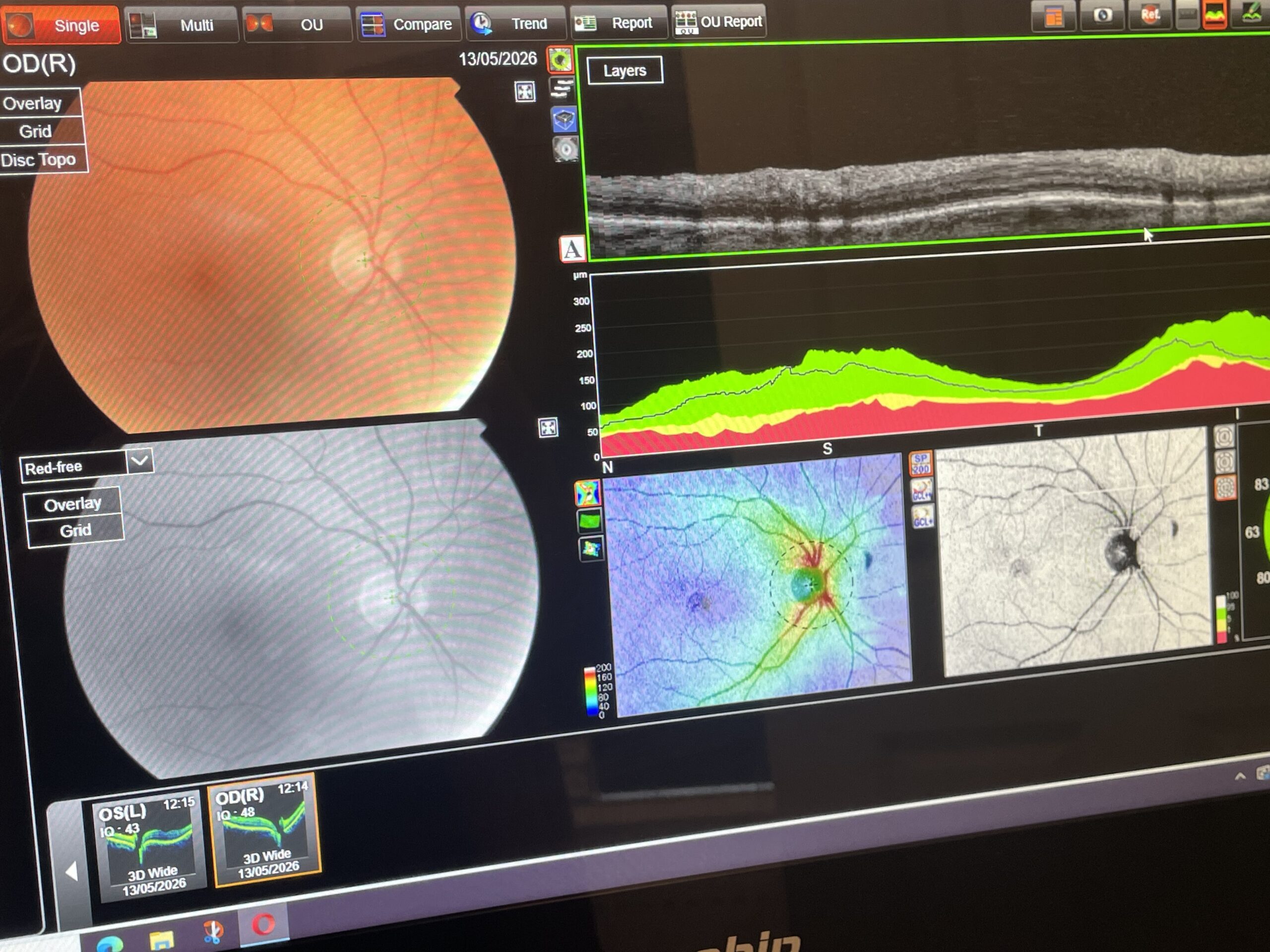
At Vision Clinic, we use detailed retinal imaging to examine the macula closely. This allows us to detect even subtle early changes and monitor them carefully over time.
Routine eye examinations are not just about updating glasses — they are an essential health check for your eyes.
Protecting Your Vision for the Future
Turning 60 doesn’t mean you should expect to lose your sight. With the right monitoring, lifestyle choices, and early intervention where needed, many people maintain useful vision for life.
If you’ve noticed changes in your central vision — or if it’s simply time for your regular check-up — our friendly team at Vision Clinic is here to help. Your eyesight supports your independence, confidence, and quality of life. Let’s look after it together.